




Over the past decade, the digitization of financial services has given rise to rapid growth in Wealth Management Platforms. By integrating asset management, risk analytics, advisory services, and regulatory compliance tools, these platforms enable financial institutions and advisors to streamline investment processes, enhance decision accuracy, and increase transparency in reporting.
- Definition and Technical Architecture
A Wealth Management Platform is an end-to-end software system structured around four core capabilities:
- Asset & Portfolio Management: Recording, tracking, and updating client portfolios in real time.
- Performance & Risk Analytics: Generating comprehensive financial reports, risk metrics, and scenario analyses.
- Advisory Services (Human, Robo, Hybrid): Delivering personalized investment recommendations through human advisors, algorithm-driven robo-advisors, or a combination of both.
- Regulatory Reporting & Compliance: Producing reports that adhere to international standards such as GDPR, MiFID II, and relevant local regulations.
Deployment architectures include:
- Cloud-Based: Hosted on public, private, or hybrid clouds, offering dynamic scalability, continuous updates, and lower infrastructure costs.
- On-Premises: Installed on an organization’s own servers, granting full control over data security and infrastructure.
The choice of deployment often depends on an institution’s regulatory requirements, budget constraints, and preference for operational flexibility.
- Market Size & Growth Forecast
The chart below illustrates the global market value of Wealth Management Platforms from 2024 to 2029.
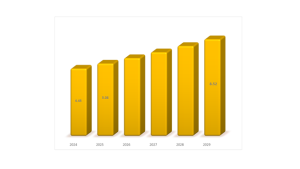
This trajectory reflects a cumulative increase of over 90% over five years. The total growth can be derived using the compound annual growth rate (CAGR) formula as follows:
Substituting the forecasted CAGR of 13.8%:
This indicates the market size is expected to nearly double by 2029 compared to 2024.
- Key Market Drivers
Several key factors are driving this market’s growth:
- Increasing Demand for Advisory Services: The number of investors leveraging wealth advisory platforms is rising steadily. TBRC reports approximately 3 million users in 2022, with a 2.1% year-over-year increase.
- Shift to Cloud-Native Platforms: Financial institutions increasingly migrate to cloud infrastructures to reduce costs, enhance scalability, and improve accessibility worldwide.
- Advancements in Artificial Intelligence (AI) & Machine Learning: These technologies enable real-time portfolio management, predictive market analytics, and tailored investment recommendations.
- Regulatory Compliance & Security Requirements: Regulations such as GDPR and MiFID II require platforms to maintain transparency, robust data protection, and comprehensive audit trails, which drive the adoption of compliant solutions.
- Market Segmentation
The Wealth Management Platform market can be segmented by:
| Category | Subsegments |
| Deployment Model | Public Cloud, Private Cloud, Hybrid Cloud, On-Premises |
| Advisory Mode | Human, Robo-Advisor, Hybrid |
| Functionality | Asset Management, Risk Analytics, Trading & Accounting, Compliance, Reporting |
| End Users | Banks, Brokerages, Investment Managers, FinTech |
Each segment presents unique opportunities and challenges, which companies can tailor to their strategic priorities.
- Emerging Trends
- Real-Time Analytics: Instant alerts and reports for faster decision-making.
- Behavioral Personalization: Tailored recommendations based on client financial behavior.
- Hybrid Advisory Models: Combining human expertise with AI efficiency.
- Blockchain Integration: Immutable transaction ledgers and smart contract capabilities.
- Low-Code/No-Code Platforms: Accelerated development and deployment of custom modules without extensive engineering resources.
- Strategic Recommendations
- Develop an API-First Ecosystem: Ensure seamless integration with core banking, CRM, and ERP systems.
- Invest in Advanced AI & Analytics: Leverage big data to improve forecasting accuracy and deliver hyper-personalized advice.
- Enhance Security & Compliance: Implement end-to-end encryption, granular access controls, and continuous audit logs.
- Adopt Microservices Architecture: Increase flexibility and scalability for modular development.
References
- The Business Research Company (TBRC) — Wealth Management Platform Global Market Report 2024
- European Securities and Markets Authority (ESMA) — MiFID II Guidelines 2022(Official guidelines and updates on MiFID II.)